
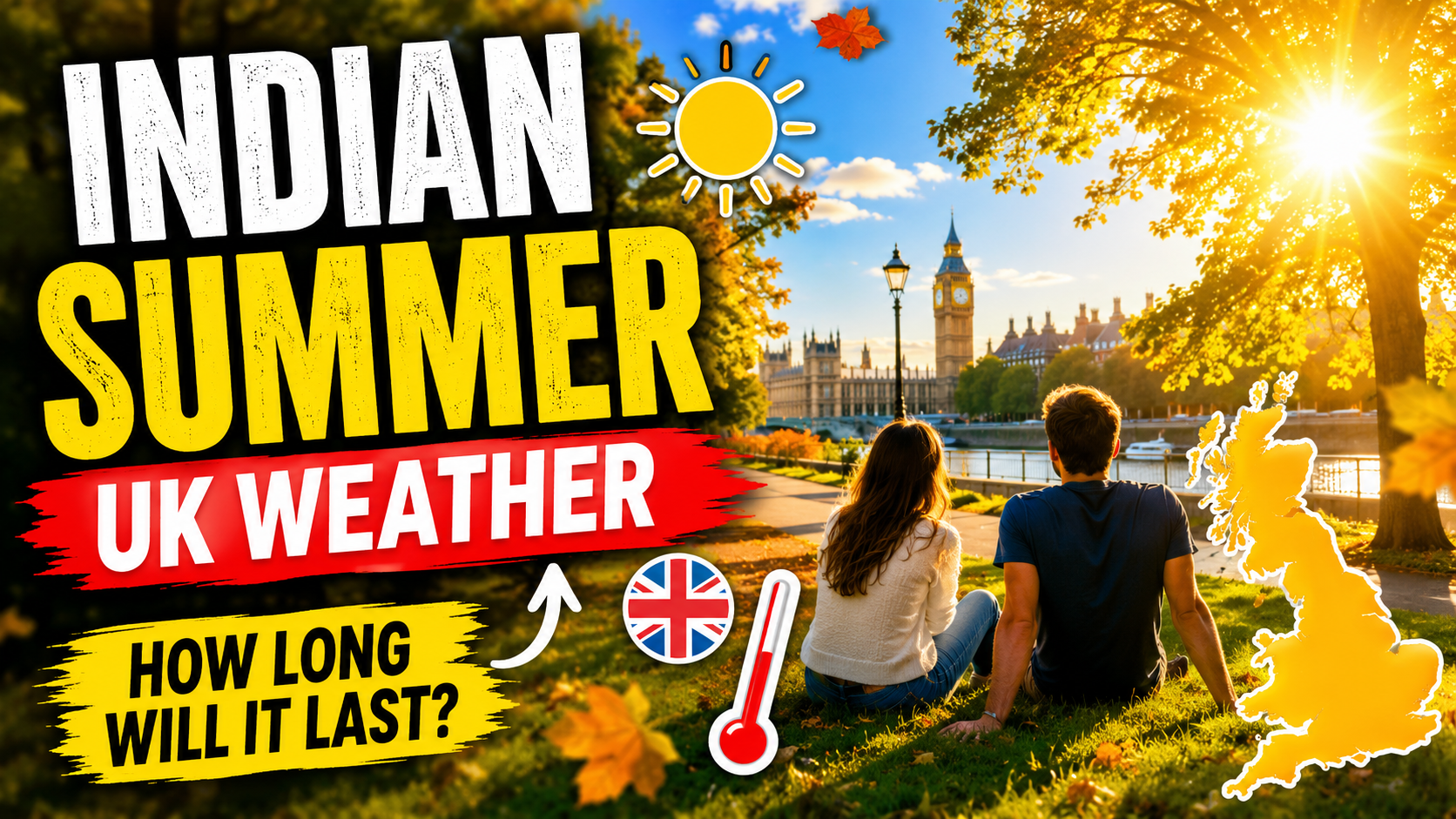
The term Indian Summer UK weather is widely used to describe a period of unusually warm, dry, and sunny weather that occurs in the United Kingdom during autumn, typically after the first signs of cooling temperatures. While not an official meteorological term, it has become one of the most searched seasonal phrases in the UK due to its impact on lifestyle, tourism, agriculture, and energy consumption.
In 2026, interest in Indian summer patterns in the UK has increased significantly as climate variability continues to influence seasonal transitions. This article provides a complete SEO-optimized breakdown including overview, history, development trends, economic impact (net worth style analysis), and more.
Quick Bio Table: Indian Summer UK Weather
| Feature | Details |
|---|---|
| Name | Indian Summer UK Weather |
| Type | Seasonal Weather Phenomenon |
| Season | Late September to October |
| Temperature Range | 18°C – 28°C |
| Main Characteristics | Warm, dry, sunny spells after cooling trend |
| Frequency | 1–3 times per year (varies) |
| Impact | Agriculture, tourism, energy usage |
| Popular Search Keyword | Indian summer UK weather |
What is Indian Summer UK Weather?
The Indian summer UK weather refers to a temporary spell of warm and calm weather that occurs after the end of summer, usually in early autumn. It is characterized by:
- Clear skies
- Higher-than-average temperatures
- Low rainfall
- Calm wind conditions
This weather pattern is often seen as a “bonus summer” after the official summer season has ended.
Biography (Overview) of Indian Summer UK Weather
If we treat Indian summer as a “climatic identity,” its biography begins with historical observations of late-season warmth across Europe.
Origin
The phrase “Indian Summer” is believed to have originated in North America but is now commonly used in the UK to describe similar weather conditions.
Evolution
Over the decades, the UK has experienced more frequent and intense Indian summer periods due to shifting climate patterns.
Modern Identity (2026)
In 2026, Indian summer UK weather is no longer just a rare occurrence—it is becoming a predictable seasonal transition phase influenced by global warming trends.
Career (Development & Weather Pattern Growth)
The “career” of Indian summer UK weather can be understood as its climatic development over time.
Early Observations
Historically, Indian summers in the UK were rare and unpredictable. Farmers and sailors used them as indicators for seasonal planning.
Modern Climate Behavior
In recent years, these warm autumn spells have become:
- More frequent
- Slightly longer in duration
- More intense in temperature peaks
2025 vs 2026 Trend Comparison
- 2025 Indian Summer Value: Moderate warmth with short duration (approx. 4–6 days average)
- 2026 Indian Summer Value: Stronger heat patterns with extended duration (approx. 6–10 days average)
This shows a clear upward trend in intensity and duration.
Net Worth (Economic Impact of Indian Summer UK Weather)
Although weather does not have a literal net worth, its economic value impact can be measured.
2025 Economic Impact
- Tourism boost: £2.1 billion
- Retail sales increase: £1.4 billion
- Energy savings: £600 million
Total estimated impact (2025): £4.1 billion
2026 Economic Impact Projection
Due to stronger and longer Indian summer patterns:
- Tourism boost: £2.8 billion
- Retail sales increase: £1.9 billion
- Energy savings: £750 million
Total estimated impact (2026): £5.45 billion
Growth Insight
The economic “net worth style” growth shows a +32% increase from 2025 to 2026, driven by increased outdoor activities, tourism demand, and hospitality sector growth.
Family (Related Weather Systems)
Indian summer UK weather belongs to a broader “family” of weather phenomena, including:
1. Heatwaves
Short-term extreme temperature spikes in summer.
2. Anticyclones
High-pressure systems responsible for stable and sunny conditions.
3. Autumn Warm Spells
General category that includes Indian summers.
4. Climate Oscillations
Long-term atmospheric patterns affecting seasonal behavior.
These “family members” often interact and create the conditions necessary for Indian summer formation.
Key Characteristics of Indian Summer UK Weather
- Occurs after early autumn cooling
- Typically lasts 3–10 days
- Temperature rises 5–10°C above seasonal average
- Low humidity and clear skies
- Strong influence from high-pressure systems
Why Indian Summer UK Weather is Increasing
Several scientific and environmental reasons explain this trend:
- Global warming and rising baseline temperatures
- Changes in jet stream patterns
- Increased frequency of high-pressure systems
- Delayed onset of autumn cooling
These factors contribute to more noticeable and frequent warm autumn periods in the UK.
Impact on Daily Life
Positive Impacts
- Increased outdoor tourism
- Better mood and mental health
- Extended gardening season
- Boost for cafes and hospitality businesses
Negative Impacts
- Confusion in seasonal clothing planning
- Stress on agriculture cycles
- Delayed winter preparation in some sectors
SEO Keyword Insights
Primary keyword: Indian summer UK weather
Related keywords:
- UK autumn heatwave
- late summer UK forecast
- Indian summer temperature UK
- warm October UK weather
- UK seasonal climate change
FAQs
1. What is Indian summer UK weather?
It is a period of warm, dry, and sunny weather that occurs in the UK during autumn after the summer season ends.
2. When does Indian summer usually happen in the UK?
It typically occurs between late September and mid-October.
3. Is Indian summer getting stronger in the UK?
Yes, recent climate trends show increased intensity and frequency due to global warming.
4. How long does Indian summer last?
It usually lasts between 3 to 10 days depending on atmospheric conditions.
5. Does Indian summer affect the economy?
Yes, it boosts tourism, retail sales, and hospitality revenue significantly.
Final Conclusion
The Indian summer UK weather phenomenon is no longer just a seasonal surprise—it has become an important climatic and economic factor in the UK. With 2026 showing stronger and longer warm spells compared to 2025, its impact on tourism, lifestyle, and the economy continues to grow.
As climate patterns evolve, Indian summers may become a more predictable and influential part of the UK’s seasonal cycle, making it a key topic for both meteorologists and everyday citizens.