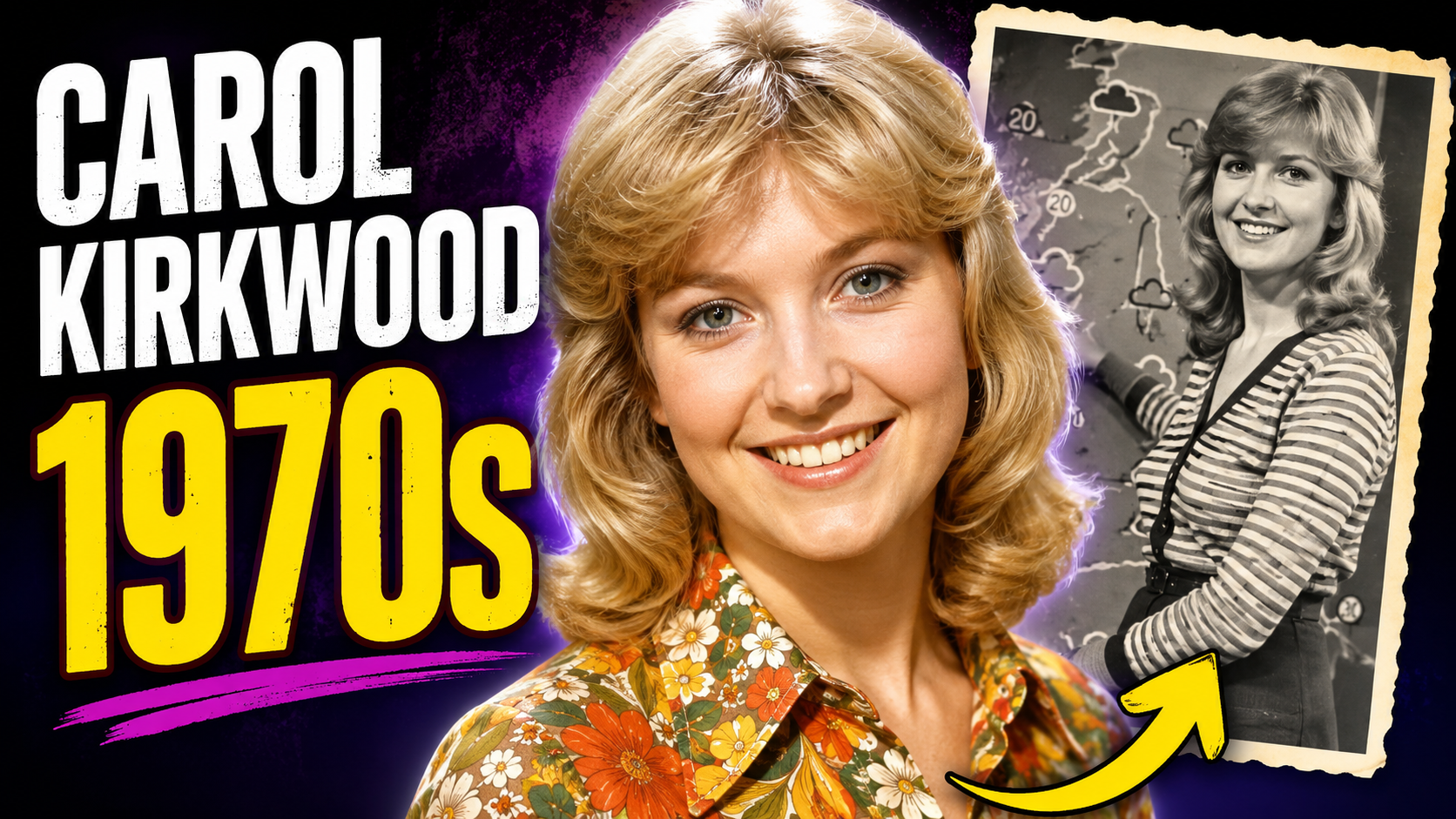
Carol Kirkwood has become one of the United Kingdom’s most recognizable weather presenters, known for her warm on‑screen presence and trusted delivery. However, before she became a familiar face on BBC Breakfast and across the national broadcast landscape, her story began long before her rise to public prominence — in the formative era of the 1970s. In this article, we explore the early life of Carol Kirkwood in the 1970s, uncover how her beginnings shaped her remarkable career, and highlight the defining moments that would lead her to become a distinguished figure in British television.
The decade of the 1970s was not only a pivotal time for Kirkwood personally but also an era of cultural change in the UK. Understanding her upbringing within this historical backdrop provides invaluable insight into the qualities, interests, and motivations that ultimately informed her professional journey. From family influences and education to early work experiences and first engagements with broadcast media, this deep, human‑centric account sheds light on Carol Kirkwood’s path to becoming a media personality.
Early Life and Family Background
Carol Kirkwood was born on 29 May 1962, in Morar, a small village located near the scenic landscapes of Lochaber in the Scottish Highlands. Although her birth predates the 1970s, her childhood and formative years were deeply rooted in this decade, which played a significant role in shaping her character. Growing up in Scotland offered her a close connection with nature, landscapes, and weather — elements that, in retrospect, foreshadowed her future career interests.
The 1970s were transformative for Kirkwood’s family life. Her parents raised her with an emphasis on education, curiosity, and resilience — values that resonated in her later professional conduct. They encouraged exploration and supported Carol in both academic and extracurricular activities. Surrounded by the rugged Scottish countryside, Kirkwood developed an appreciation for the environment and a grounded sense of identity.
During family gatherings and childhood summers, she developed strong social skills and an engaging personality. These early experiences — listening to stories, observing adults interact, and joining community activities — honed her ability to communicate effortlessly. Little did anyone know that this skill would later flourish on national television.
Moreover, the 1970s were not just a backdrop but an active influence on young Carol Kirkwood’s early worldview. Political changes, cultural revolutions, and evolving media in the UK during this time helped shape her perception of communication and public visibility. For a child with a naturally inquisitive mind, this environment proved intellectually stimulating and emotionally formative.
Education and Formative Years
As Carol Kirkwood progressed through school, her academic performance remained consistently strong. She attended her local schools in Scotland where teachers quickly noted her enthusiasm for learning and confident communication style. While she did not yet aim for a career in broadcasting during these early years, her ability to comfortably engage with audiences — peers and adults alike — stood out.
The 1970s education system in Scotland emphasized traditional subjects such as English, literature, geography, and sciences. Kirkwood particularly excelled in English and geography, subjects that contributed to her later aptitude in articulating information with clarity and relevance. Geography, with its emphasis on climate patterns and global phenomena, subtly planted seeds that would later resurface during her meteorological career.
Outside of academics, her participation in school plays, debate clubs, and public speaking events further polished her presence before crowds. Teachers encouraged her natural flair for performance, but at this stage, Kirkwood focused primarily on broad educational goals rather than a specific vocational path.
Importantly, the influence of cultural advancements in the 1970s — including music, television, and public discourse — ignited her interest in broader social dynamics. Exposure to news programs, educational documentaries, and Premier League broadcasts expanded her worldview and strengthened her belief in the importance of communication.
The Cultural Landscape of the 1970s and Its Influence
To appreciate Carol Kirkwood’s early influences, we must understand the environment of the 1970s as a dynamic period in British history. The decade was marked by significant social change, economic turbulence, and a reshaping of media consumption.
Television became increasingly central to British households, with iconic programs like Nationwide and Grandstand commanding attention. For young viewers like Carol, television was not just entertainment — it was a window into global events, weather patterns, social commentary, and cultural narratives. Weather forecasting began gaining prominence on national broadcasts, bringing meteorological reporting into everyday conversation.
Musically, the 1970s were explosive: the rise of rock, punk, and disco vastly diversified cultural expression. These artistic movements brought with them an ethos of individuality, confidence, and creativity — factors that would resonate with Carol’s communicative personality in later life.
Furthermore, political shifts and discussions about national identity framed public consciousness in a way that encouraged introspection, debate, and participation. Growing up amidst such discourse helped strengthen Kirkwood’s ability to process complex ideas and convey them articulately — core skills for anyone entering broadcast journalism.
In this cultural mosaic, the seeds of Carol Kirkwood’s future career — her comfort before the camera, her interest in how information impacts people, and her ability to adapt to media evolution — were sown.
Early Career Aspirations and First Professional Steps
Although the 1970s laid the groundwork for her interests, it was in the early 1980s that Carol Kirkwood began to formally shape her career ambitions. After completing her secondary education, she pursued further studies at a college level, where she gained qualifications in marketing and communication.
Her first professional roles were in the realm of sales and marketing. She worked with various organizations where client interaction, promotional communication, and public engagement were central responsibilities. These early roles, though not directly connected to broadcasting, helped Kirkwood refine her professional demeanor, sharpen interpersonal skills, and gain confidence in public communication.
During this time, television was gradually transforming. Weather reports were evolving from static segments to dynamic televised forecasting, increasingly valued by audiences. As Kirkwood observed these developments, the idea of moving towards media began taking clearer shape.
Although she was not yet a meteorologist, her academic strengths in geography and communications gave her a meaningful foundation. She was drawn toward the idea of interpreting complex information and presenting it in a form that the general public could understand — a core element of broadcast weather reporting.
By the late 1980s, Carol Kirkwood began exploring opportunities that would combine her enthusiasm for communication with her ability to explain scientific or data‑driven topics. At this stage, the influences of her formative years — especially the communication skills nurtured during the 1970s — were becoming increasingly evident.
Transition to Broadcast Media
The leap from marketing and sales into broadcast media was neither immediate nor entirely planned. Carol Kirkwood’s entry into television was the result of a combination of preparation, skill, and serendipity.
In 1987, she joined the BBC as a freelance presenter. Initially, she worked behind the scenes and contributed to different programs where her responsibilities included producing content, supporting research teams, and occasionally appearing on camera for lighter segments. This period was foundational. It tested her ability to adapt to broadcast environments and challenged her to think quickly, communicate clearly, and manage the unique demands of live television.
The influence of her early experiences — comfort with live audiences, strong vocabulary, and analytical instincts — became powerful assets as she navigated this transitional phase.
Although this career shift occurred after the 1970s, it can be traced back to the confidence and interests that took root during that decade. Her future in weather presenting seemed increasingly aligned with both her academic background and her talent for communication.
By the early 1990s, Carol Kirkwood had earned regular spots presenting weather segments. Her poise, friendly delivery, and credibility captured audiences, leading to her selection as one of the principal weather presenters on BBC Breakfast — the program that would cement her reputation across the UK broadcasting landscape.
Defining Moments and Breakthroughs
Throughout her career, certain defining moments stand out as watershed experiences that elevated Carol Kirkwood from talented presenter to national icon. These moments resonate not only because of her professional skills but also because they reflect the foundation laid during her upbringing and early influences.
A: Establishing a Trusted Public Persona
What distinguishes Carol Kirkwood is her blend of professionalism with approachability. Viewers feel as though she speaks directly to them, breaking down meteorological data without jargon and connecting with audiences on a personal level. This empathetic communication style — shaped through family, education, and early public speaking opportunities — became her signature strength.
Over time, her ability to communicate complex weather patterns in relatable ways helped the public engage more deeply with scientific information, especially during critical weather alerts. Her credibility grew not just from her expertise but from her emotional intelligence — an aspect rooted in her early years in the 1970s.
B: Key Broadcast Moments
As her career progressed, Kirkwood became the face of weather forecasting during major national events. Whether covering severe weather fronts, summer heatwaves, or holiday travel forecasts, she demonstrated consistency, reliability, and composure — qualities essential for trust on live television.
Her high‑profile presence on BBC Breakfast gave her a platform that extended beyond weather reporting. She became a familiar and reassuring voice in households across the nation, a role that few presenters achieve.
These breakthroughs were not overnight phenomena but rather the result of decades of skill cultivation and professional integrity.
Legacy and Ongoing Influence
Today, Carol Kirkwood remains an influential figure in British media. She continues to present weather segments, engage with the public, and participate in broadcast events that celebrate her career.
Her journey from a Scottish childhood rooted in the 1970s to becoming one of the UK’s most respected weather presenters illustrates how early life experiences, education, and cultural context can shape a lifelong vocation. The curiosity nurtured in her youth, her affinity for communication, and her resilience in pursuing new professional horizons collectively define her legacy.
Beyond her on‑screen achievements, Kirkwood serves as an inspiration for individuals seeking to pivot careers, embrace lifelong learning, or step confidently into public communication roles. Her story underscores the significance of adaptability, passion, and authenticity — lessons that remain relevant for anyone navigating the modern professional era.
Conclusion: Reflecting on Carol Kirkwood’s 1970s Foundation
The decade of the 1970s may seem distant from Carol Kirkwood’s later achievements, but it was a foundational period that influenced her identity, communication style, and professional trajectory. The cultural landscape of the UK during that time, coupled with the values nurtured by her family and education, equipped her with the skills and confidence that would define her work in decades to come.
From a Scottish childhood to the heights of broadcast media, Carol Kirkwood’s story exemplifies how early influences can ripple into a lifetime of professional excellence. The warmth, intelligence, and credibility she brings to her work today are reflections of both her innate talent and the formative experiences of her 1970s upbringing.
Her journey remains a testament to how personal history, cultural environment, and professional ambition can converge to create a lasting impact — not only on viewers but also on the evolving field of broadcast communication.