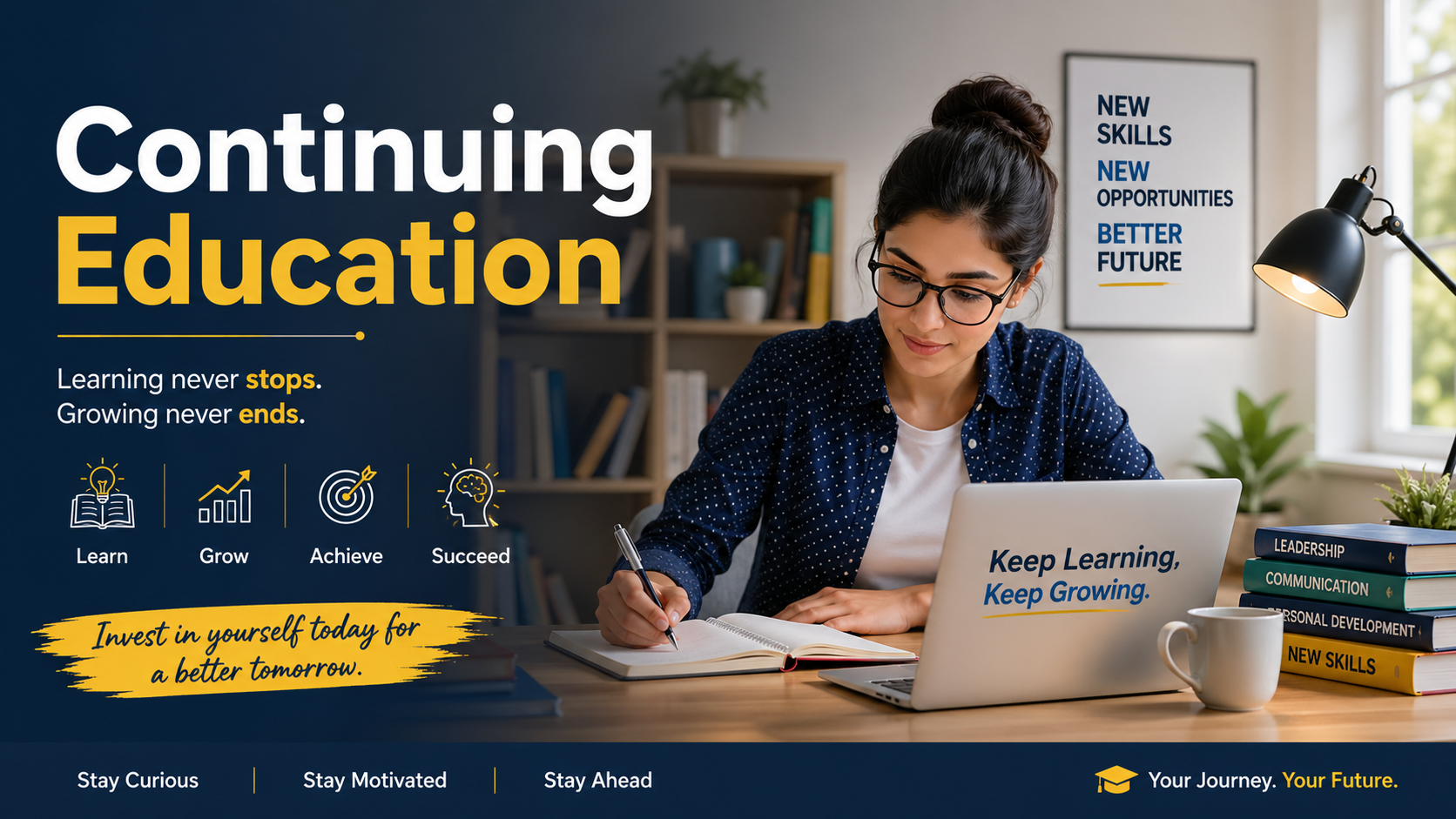
In today’s fast-paced world, the key to staying competitive and advancing your career lies in continuing education. It’s not just about earning a degree or certification; it’s about keeping up with new trends, developing critical skills, and enhancing your knowledge throughout your career. Continuing education plays a pivotal role in personal and professional growth, helping individuals not only stay relevant in their fields but also position themselves as leaders in their respective industries.
In this article, we will explore the significance of continuing education, the various ways it can benefit your career, and how you can incorporate it into your busy lifestyle. Whether you are looking to upgrade your qualifications, learn new skills, or pursue a passion, continuing education offers endless opportunities.
What is Continuing Education?
Continuing education refers to any form of learning that is pursued after formal education, such as high school or college. It’s an ongoing process that helps individuals develop new knowledge, skills, and expertise, often in a professional or academic context. This can take many forms, including workshops, online courses, certifications, workshops, seminars, and more.
Unlike traditional education, which often follows a structured path, continuing education allows for more flexibility, enabling individuals to learn at their own pace. In a world that’s rapidly changing, continuing education helps you keep up with new technologies, methodologies, and advancements in your field.
Why is Continuing Education Important?
The need for continuing education has never been more pressing. With the rise of automation, technological advances, and globalization, industries are evolving at an unprecedented rate. Here are several reasons why continuing education is essential for your career:
- Stay Competitive: Continuous learning helps you remain competitive in your field. As new trends and technologies emerge, you can learn how to incorporate them into your work, which can set you apart from others in your industry.
- Increase Job Security: Employers prefer employees who demonstrate a commitment to lifelong learning. It not only shows that you are proactive but also helps you gain the skills necessary to stay valuable within your organization.
- Professional Growth: Continuing education helps you unlock new opportunities, whether it’s moving up within your current organization or transitioning to a different career path. By enhancing your qualifications, you open doors to new job roles, promotions, or higher-paying opportunities.
- Boost Confidence: As you gain new knowledge and expertise, your confidence grows. Whether you’re learning how to lead a team or mastering a new technology, continuing education gives you the tools to excel and take on new challenges.
- Personal Fulfillment: Continuing education can also be about personal growth. It allows you to explore subjects that interest you, build new hobbies, or even switch to a completely new career. It’s about finding fulfillment in your career and life, not just staying employed.
The Different Forms of Continuing Education
There are various options available for continuing education, depending on your learning style, goals, and available time. Here are some common options:
1. Online Courses and Certifications
Online education has become more accessible than ever, thanks to platforms like Coursera, edX, LinkedIn Learning, and Udemy. These platforms offer a wide variety of courses in almost every field imaginable, from data science and project management to marketing and healthcare. Many of these courses come with certificates upon completion, which can be added to your resume.
2. Workshops and Seminars
Workshops and seminars are another excellent way to gain specialized knowledge in a particular area. These events are typically short-term and can be conducted online or in person. They focus on specific topics, offering in-depth learning experiences that can be immediately applied in the workplace.
3. Degree Programs and Advanced Certifications
For those looking to pursue deeper learning, degree programs (master’s, doctorates, etc.) or advanced certifications (like PMP, Six Sigma, or CPA) can provide a significant boost to your career. While these options require more time and effort, they can open doors to higher-paying and more prestigious job opportunities.
4. Corporate Training and Mentorship
Many organizations offer continuing education through in-house training programs or mentorship opportunities. These programs are designed to improve employee skills and are typically tailored to meet the needs of the organization.
5. Self-Paced Learning
If you have a particular interest but cannot commit to structured courses, self-paced learning might be a good option. Books, podcasts, blogs, and online articles are excellent resources for expanding your knowledge base without a formal commitment.
How Continuing Education Can Boost Your Career
Investing in continuing education can lead to several professional benefits. Here’s how it can directly impact your career:
1. Accelerates Career Advancement
As industries continue to evolve, so do the expectations for employees. By participating in continuing education, you gain the skills necessary to meet these evolving demands. Whether it’s mastering a new software tool or becoming an expert in your field, continued learning allows you to move up the corporate ladder more quickly.
2. Expands Career Options
Sometimes, the career path you start with isn’t the one you’ll end up in. Continuing education can help you pivot into a new field. Whether you want to switch industries or pursue a new specialization, gaining additional qualifications and skills can open new career opportunities.
3. Increases Earning Potential
Higher qualifications and specialized skills often correlate with higher salaries. By investing in continuing education, you increase your value in the job market, making you eligible for promotions or higher-paying job offers.
4. Keeps You Updated on Industry Trends
Staying updated with the latest developments in your field is essential for professional growth. Continuing education ensures you are always in the loop with the latest trends, practices, and technologies, which makes you an asset to your employer.
Overcoming Barriers to Continuing Education
While the benefits of continuing education are clear, many professionals face barriers that prevent them from pursuing it. Some common obstacles include time constraints, cost, and a lack of motivation. However, there are ways to overcome these challenges:
1. Time Management
Balancing work, family, and education can be challenging, but it’s important to prioritize continuing education. Consider setting aside a few hours each week for studying or completing online courses. Some programs are self-paced, which means you can learn at your convenience.
2. Financial Support
The cost of education can be daunting, but there are numerous ways to finance your learning. Many employers offer tuition reimbursement programs or financial aid for education. Additionally, some courses offer financial assistance or payment plans to make the learning process more affordable.
3. Motivation and Consistency
Staying motivated throughout your learning journey can be difficult. To overcome this, set clear goals, track your progress, and reward yourself when you reach milestones. Joining study groups or participating in online forums can also keep you engaged.
How to Choose the Right Continuing Education Program
Choosing the right program is essential to ensuring that you achieve your learning and career goals. Here are some tips for selecting the best program for your needs:
1. Identify Your Learning Goals
Before choosing a program, clarify what you want to achieve. Do you want to specialize in a new area? Do you need a certificate to advance in your current job? Understanding your goals will help you find the right program.
2. Consider Your Schedule and Learning Style
If you have a busy lifestyle, consider programs that offer flexibility, such as online courses. Also, think about your preferred learning style. Do you prefer hands-on training or theoretical learning?
3. Research the Program’s Reputation
Make sure that the program is offered by a reputable institution. Read reviews and check the program’s accreditation to ensure that it provides quality education.
4. Evaluate the Cost and Financial Aid Options
Ensure that the program fits within your budget and look for scholarships or financial aid options if necessary.
Continuing Education and Personal Development
While continuing education is often associated with professional development, it also plays a key role in personal growth. Learning new things not only helps you excel in your career but also nurtures curiosity and enhances critical thinking. Engaging in continuing education allows you to explore diverse interests, cultivate new hobbies, and become a more well-rounded individual.
Conclusion
In an ever-evolving world, continuing education is essential to staying relevant, improving your skills, and advancing your career. By embracing the concept of lifelong learning, you open the door to new opportunities, increased earning potential, and personal growth. Whether you are looking to climb the corporate ladder, switch careers, or simply learn something new, continuing education is a powerful tool that can help you achieve your goals.
Remember, the world doesn’t stop changing, and neither should you. Embrace continuing education today, and watch your career and life transform.